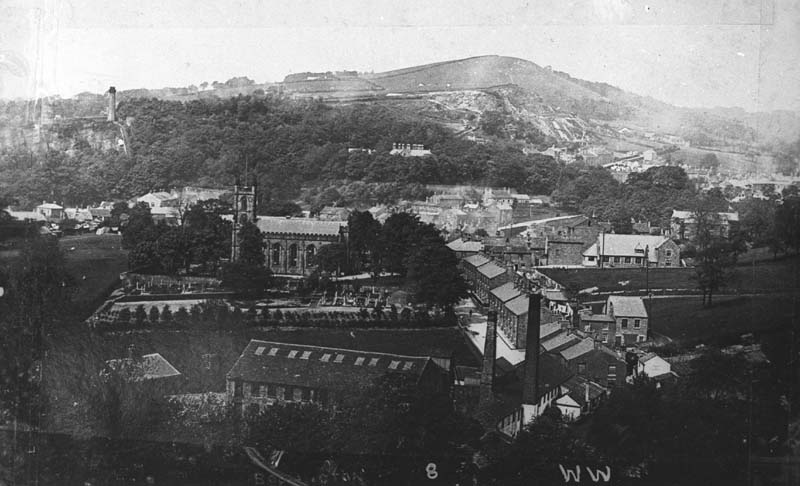
View from the footpath beyond the end of Cow Lane. Note, from left, Beeston quarry with Oak Bank mill chimney on hill top; St John’s (Anglican) church; the roof top and chimneys of Oak Bank House on the hillside among the trees; bottom left, the cottage that stood where the entrance to Tullis Russell is today by the river bridge at the end of Church Street; Higher mills at the near end of Church Street; middle right, Lowther Street school, and above and to the right, St Gregory’s (Catholic) church. The Nab is the hill in the background, with quarries on its lower slopes.
Locations 2: Bollington
-
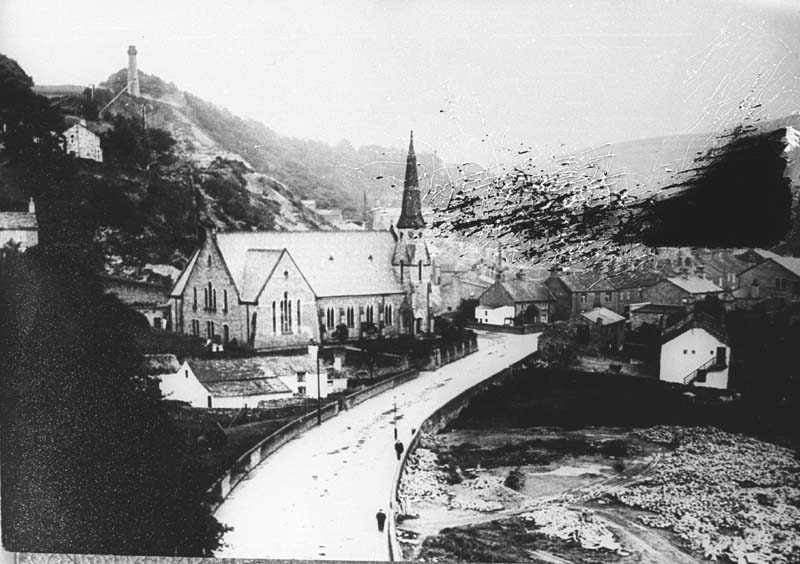
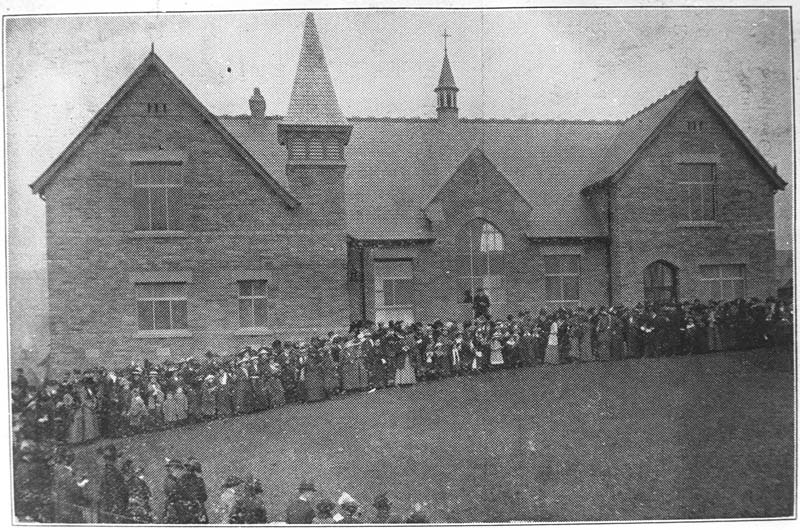
Congregational church, Palmerston Street
A poor copy of this picture. There is a better copy on file.
-
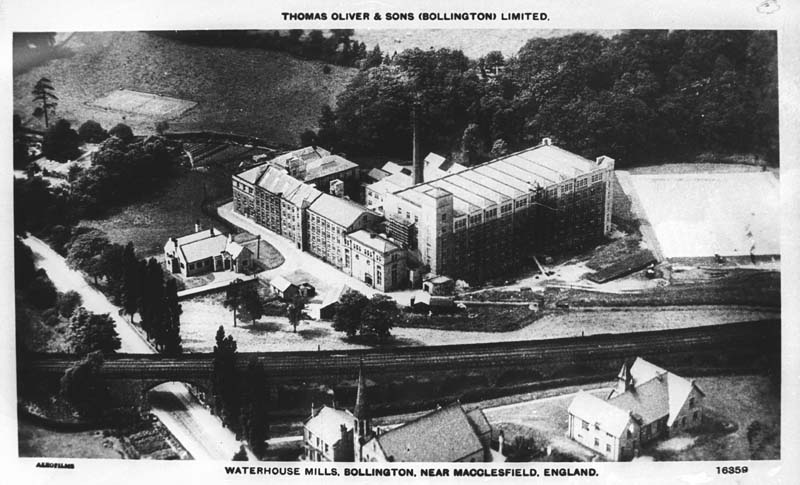
Waterhouse mill
The first mill on this site was erected in c.1790. This was replaced after a fire in 1800. That mill, which became locally known as Olivers mill, due to being owned by that family, was added to and enlarged over the years until spinning ended in 1962. The mill closed and was demolished. It was replaced by what was then a modern factory making foam blocks for use in aircraft seats among many other purposes. During its cotton spinning days Waterhouse mill is said to have produced the finest (thinest) thread in the world and this was sold especially to fine lace makers including those in Nottingham and Brussels. In 2012 the Kay Metzeller factory was closed and demolished and over the subsequent three years the present housing estate was built.
-
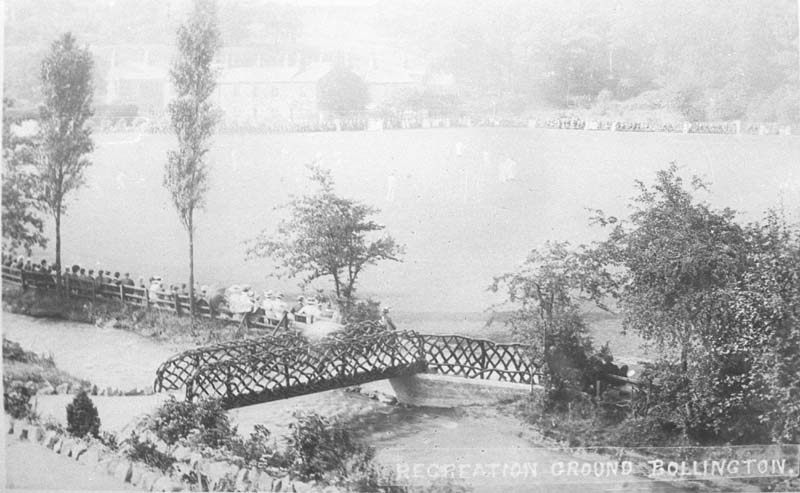
Recreation Ground
The rough wooden lattice bridge providing access from Round Gardens to the Recreation ground. There is a large audience sitting along the far side of the river, no doubt watching sport.
-
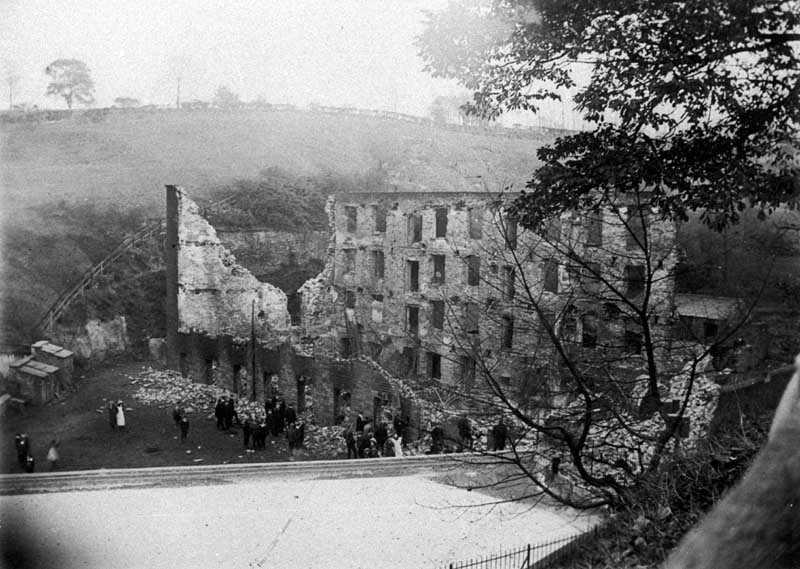
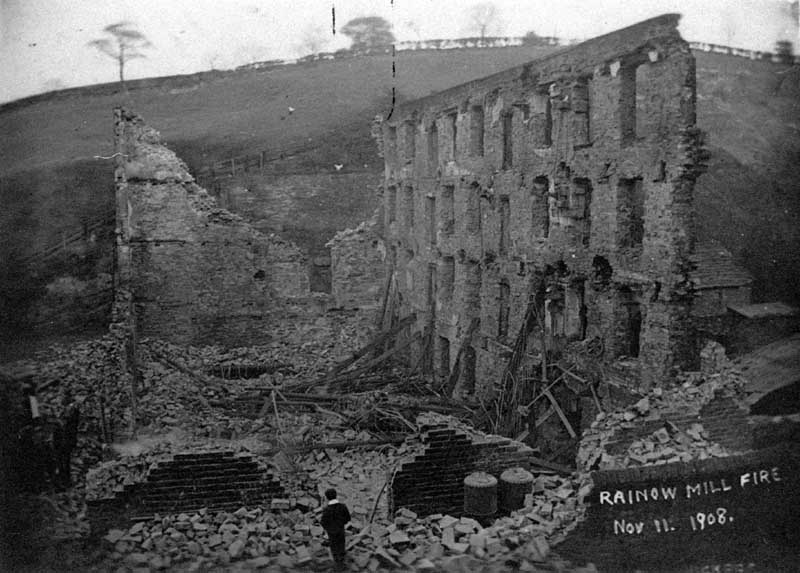
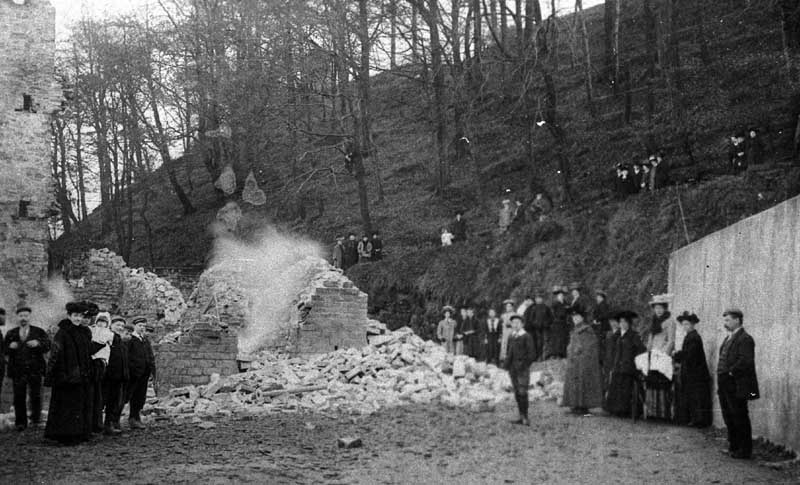
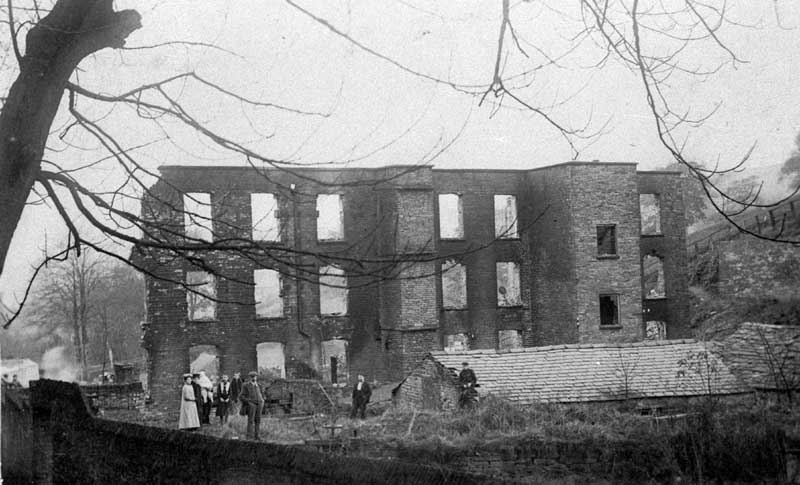
Rainow Mill
All that remained after a disastrous fire on 11 November 1908. In the foreground is the settling tank for Clough mill, further up Ingersley Vale.
-
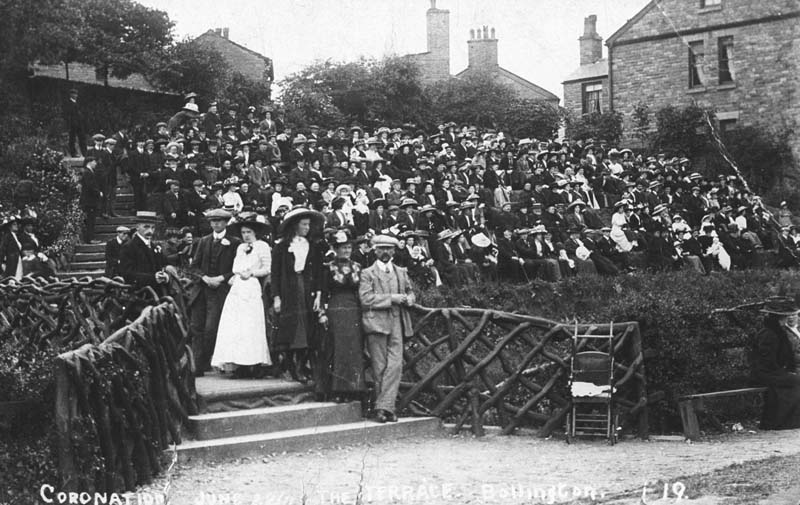
Crowd watching Coronation event on Recreation Ground
A large crowd, in their Sunday best, sitting on the terraces overlooking the Recreation Ground. While we know it was to do with a coronation (Edward VII, 1902) we do not know what the actual activity was that they were watching!