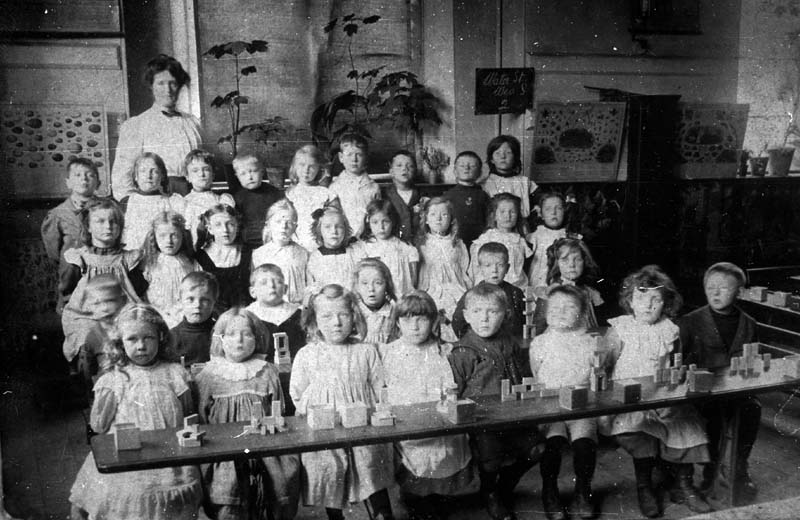
This appears to be a Victorian school class, and is believed to be at Water Street. Looks like an interesting exercise in building with small bricks!
Collection: Photos
-
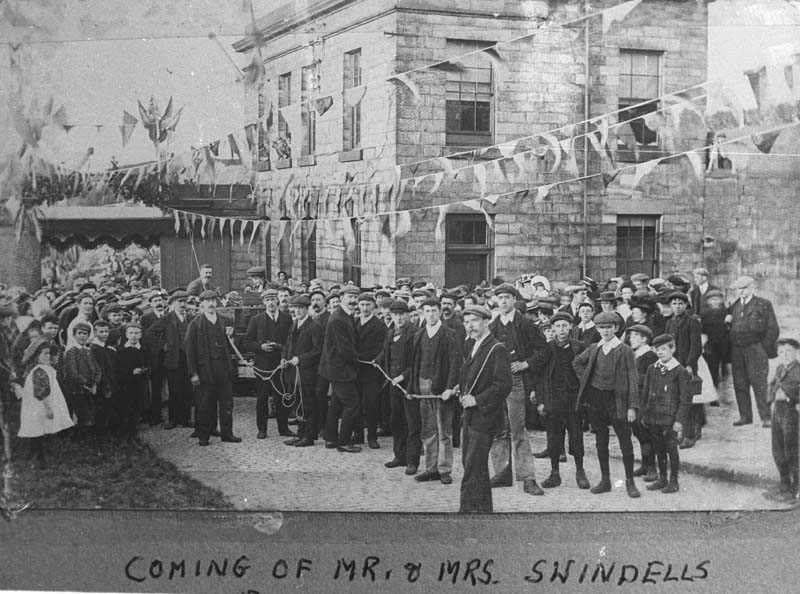
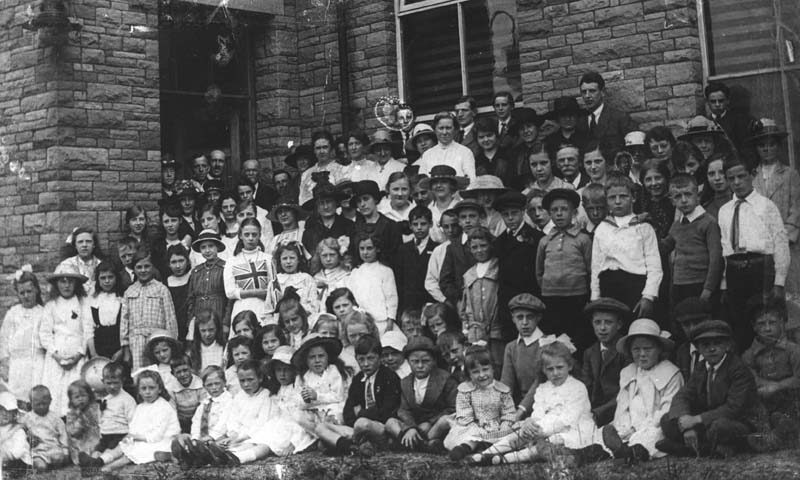
Marriage of Mr G H Swindells & Miss S L Maitland-Addison
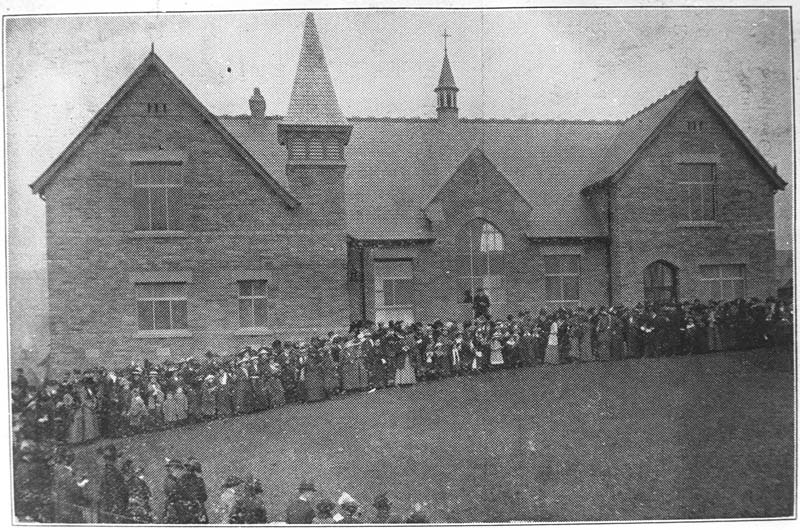
On their return from honeymoon, Mr & Mrs Geoffrey Swindells, director at Adelphi mill, were paraded by the workers at the mill. It was not a long marriage – Geoffrey Swindells was killed on 1st August 1918 in France during his service in WWI. The couple lived at Clough Bank House, behind Adelphi mill.
-
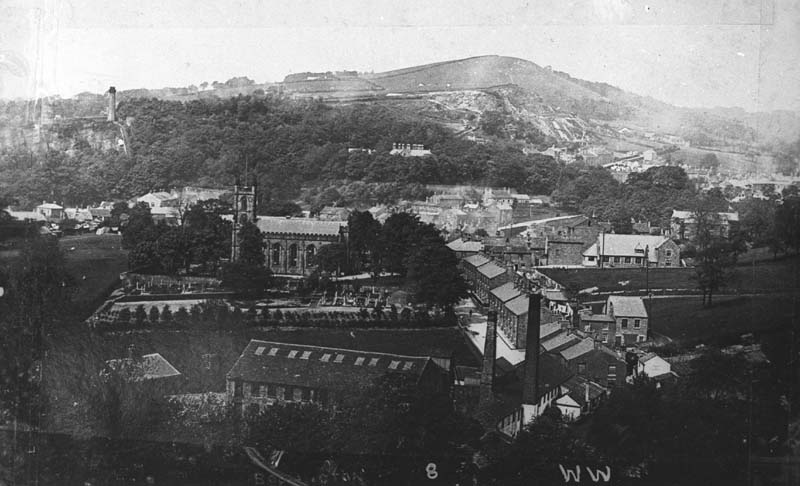
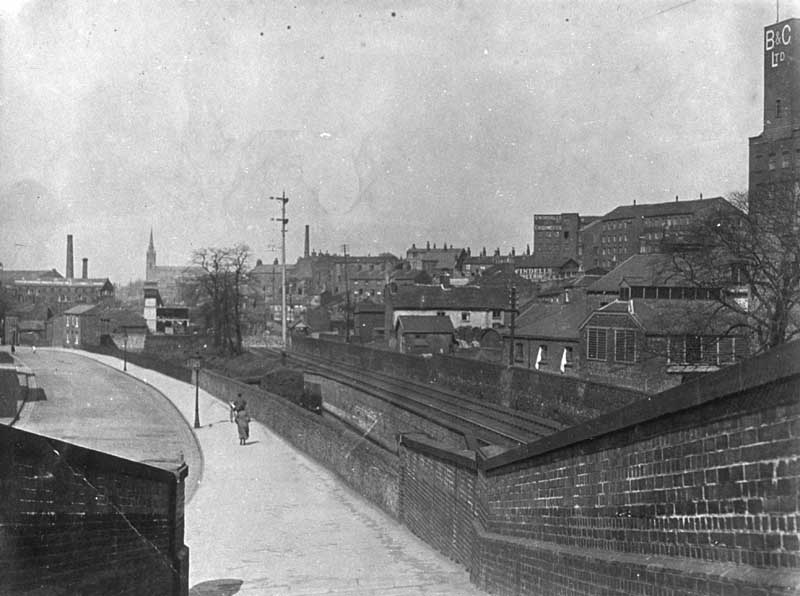
View across Bollington
View from the footpath beyond the end of Cow Lane. Note, from left, Beeston quarry with Oak Bank mill chimney on hill top; St John’s (Anglican) church; the roof top and chimneys of Oak Bank House on the hillside among the trees; bottom left, the cottage that stood where the entrance to Tullis Russell is today by the river bridge at the end of Church Street; Higher mills at the near end of Church Street; middle right, Lowther Street school, and above and to the right, St Gregory’s (Catholic) church. The Nab is the hill in the background, with quarries on its lower slopes.
-
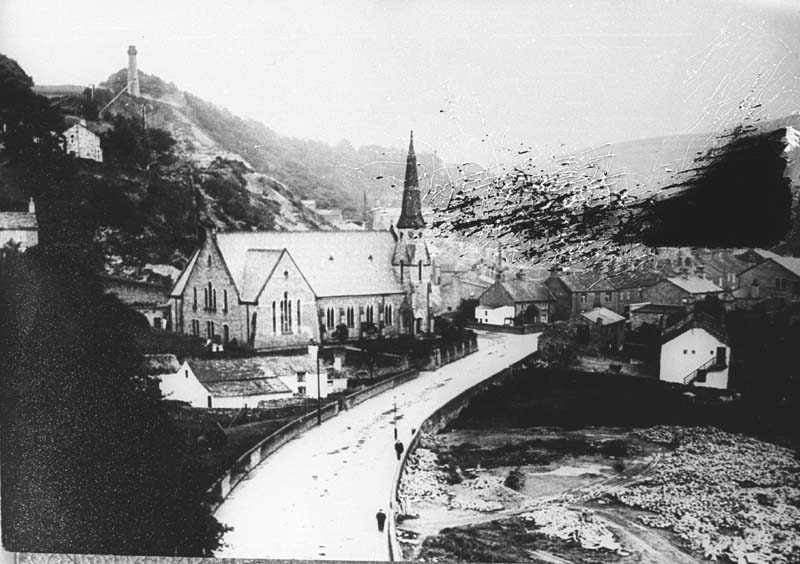
Congregational church, Palmerston Street
A poor copy of this picture. There is a better copy on file.
-
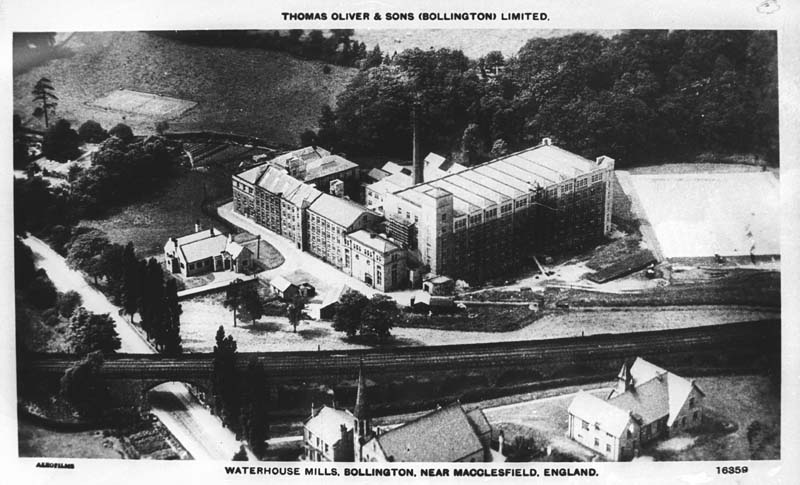
Waterhouse mill
The first mill on this site was erected in c.1790. This was replaced after a fire in 1800. That mill, which became locally known as Olivers mill, due to being owned by that family, was added to and enlarged over the years until spinning ended in 1962. The mill closed and was demolished. It was replaced by what was then a modern factory making foam blocks for use in aircraft seats among many other purposes. During its cotton spinning days Waterhouse mill is said to have produced the finest (thinest) thread in the world and this was sold especially to fine lace makers including those in Nottingham and Brussels. In 2012 the Kay Metzeller factory was closed and demolished and over the subsequent three years the present housing estate was built.
-
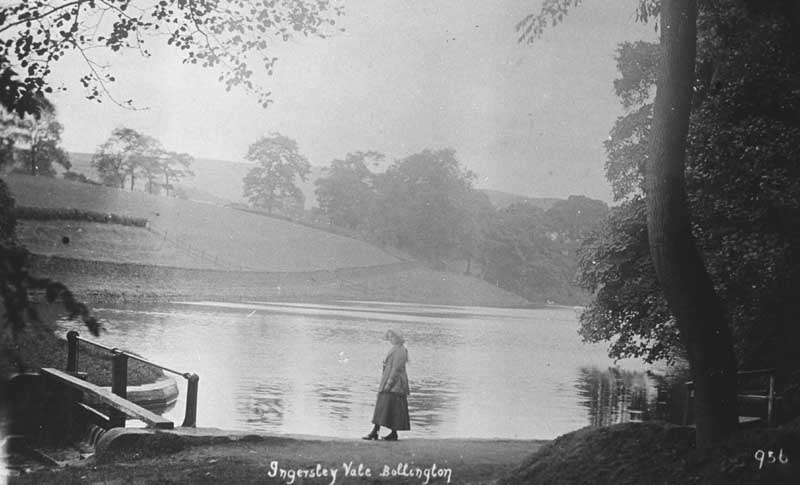
Clough Mill pond
Ingersley Vale (or Clough) mill pond. This pond provided the water to turn the waterwheel that powered Ingersley Vale mill. The water area is very largely reduced today due to lack of dredging, nature has taken over. In 2016, it was acquired by a local couple who have significantly tidied the site and are managing both the vegetation and the wild life. The waterfall, just off the left of the picture, remains one of the most visited locations in Bollington/Rainow.