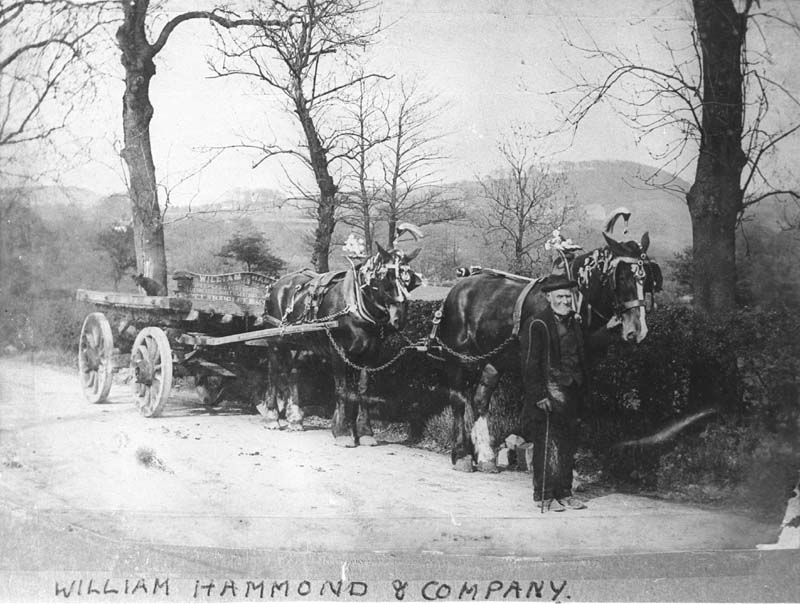
Cart decorated for May Day. Employed by William Hammond and Co to cart between the brickworks and Bollington station. See “Looking back at Bollington” for full details. William Hammond brickworks was at Bakestonedale above Pott Shrigley.
Collection: Photos
-
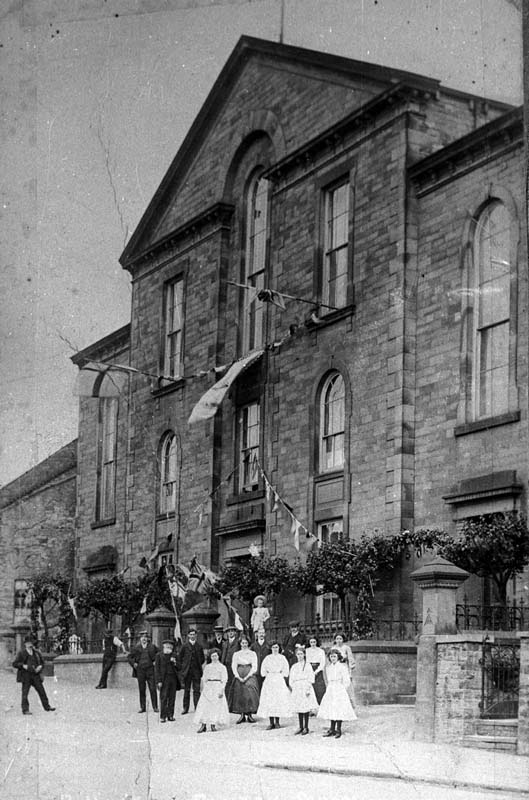
Large Sunday school on Palmerston Street
This huge building was built by the Methodists and served as a Sunday school and meeting room until the early 1970s. It was then demolished, the entry to Hurst Lane was widened, and the Civic Hall and Library were built in its place. It was always known as the Large Sunday school to differentiate it from other, smaller, Sunday schools.
-
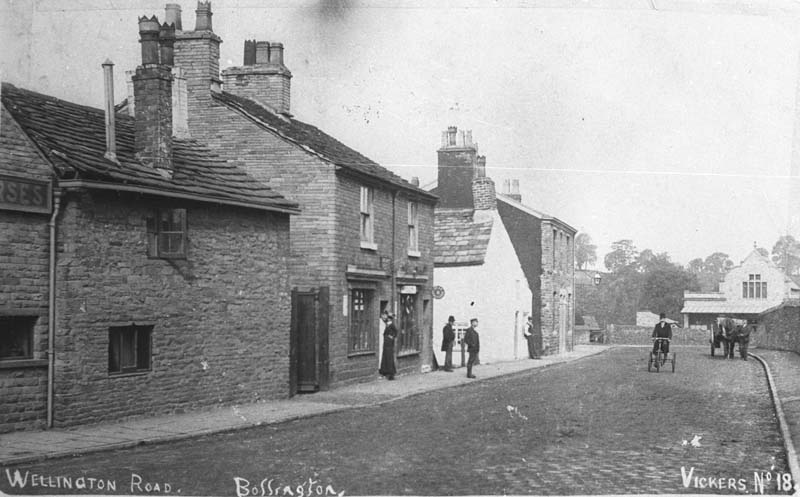
Wellington Road and Co-operative stores
Part of the Waggon and Horses hotel visible on the extreme left. On the right, at the corner of Albert Road, is part of a unit of three shops built by the Macclesfield Equitable Provident Society in 1903 and demolished about seventy years later.
-
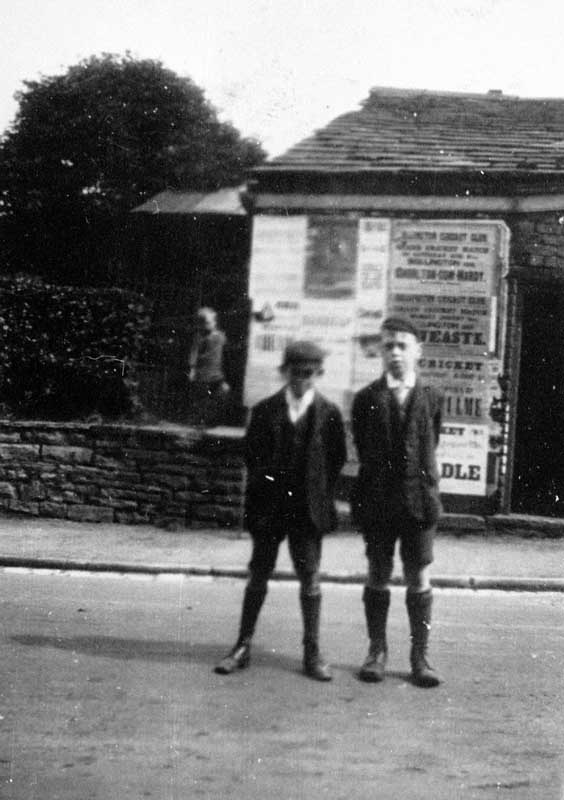
Smithy, Wellington Road
L to R Donald Smith (background), Hubert Whitehurst, Jack Faulder.
The Faulders owned the smithy from 1906 to c.1931. Used after that by Bollington Urban District Council to store barrows etc. -
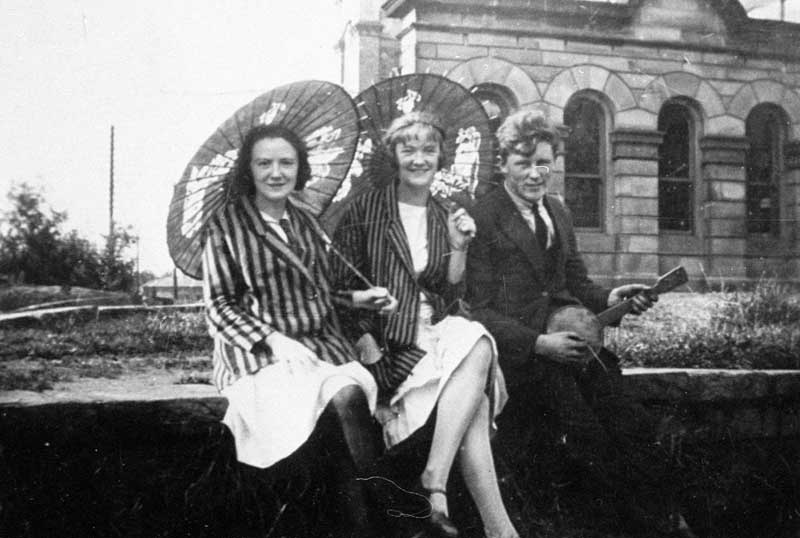
Clarence Lodge, Clarence Mill
Family lived in Clarence Terrace. Father worked at Clarence. Came from Stockport after WWI when spinners wanted.
-
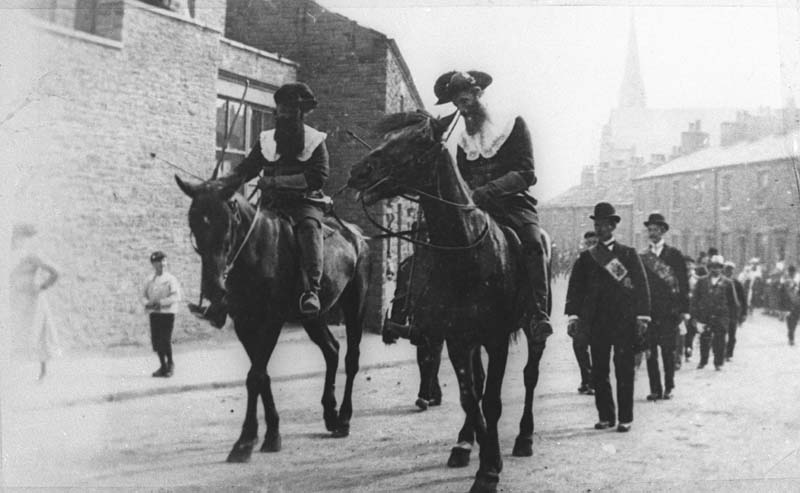
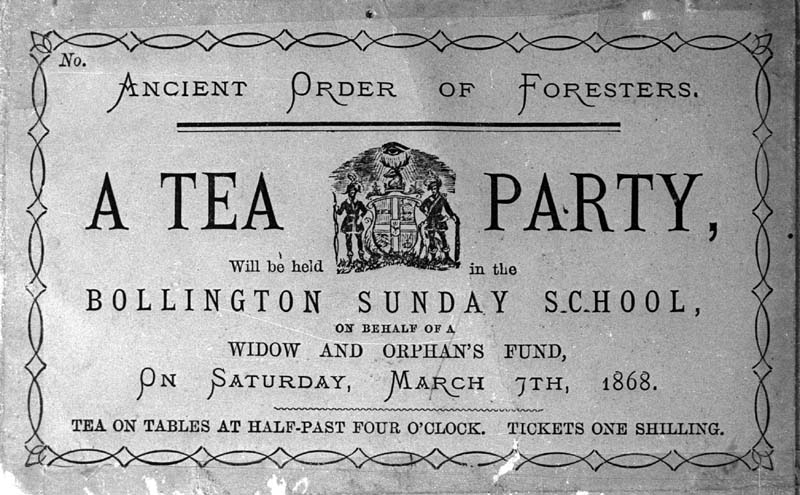
Foresters procession on Palmerston Street
See “Bollington in old picture postcards” no. 40 for full details. Friendly societies provided sickness and death benefits for those who could afford the dues. Annual Wakes week processions were followed by dinner and festivities at whichever pub the lodge was based.
-
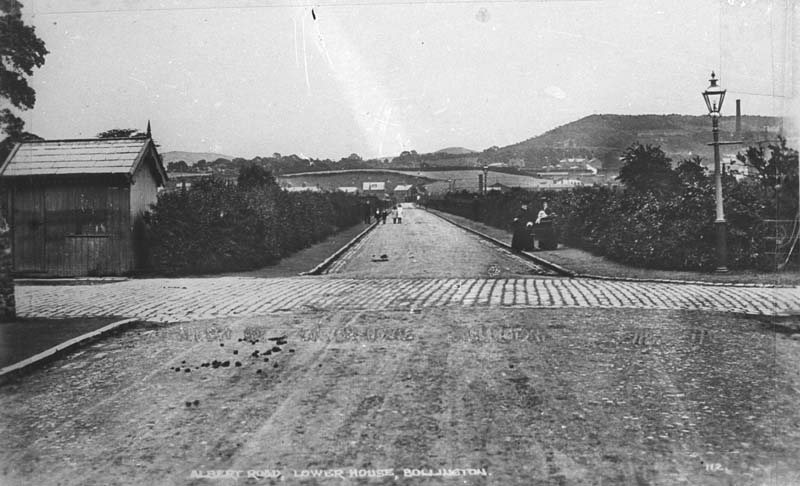
Albert Road
See “looking back at Bollington” for full details. The setts are where Moss Brow crosses Albert Road. Moss Brow provided the original access to Lowerhouse mill, which is just off the right of the picture.